Why Smarter Waste Management Is Becoming a Business Advantage
Companies are running into a familiar challenge, and it tends to arrive quietly in the background while everyone is focused on growth. Waste streams get more complicated, regulations tighten, and suddenly a business that once dealt with straightforward trash pickup is navigating a landscape that feels more like a moving target. Managing complex waste streams is no longer a chore someone hands off to the facilities team. It has become a strategic function that influences brand credibility, operational efficiency, and long term resilience. The shift has been building for years, and the companies adapting with a clear, thoughtful approach are finding that smarter systems pay for themselves.
Understanding Waste Complexity Today
Modern operations create a wider mix of byproducts than ever. Between packaging, organics, chemicals, electronics, and niche industrial outputs, the composition of waste now looks more like a taxonomy chart than a single category. Businesses used to think of waste removal as a predictable line item. Today it often asks for real-time decisions and a level of sorting that used to be reserved for recycling centers. The more global a company becomes, the more this complexity expands, because every jurisdiction has its own rules, timelines, and reporting requirements.
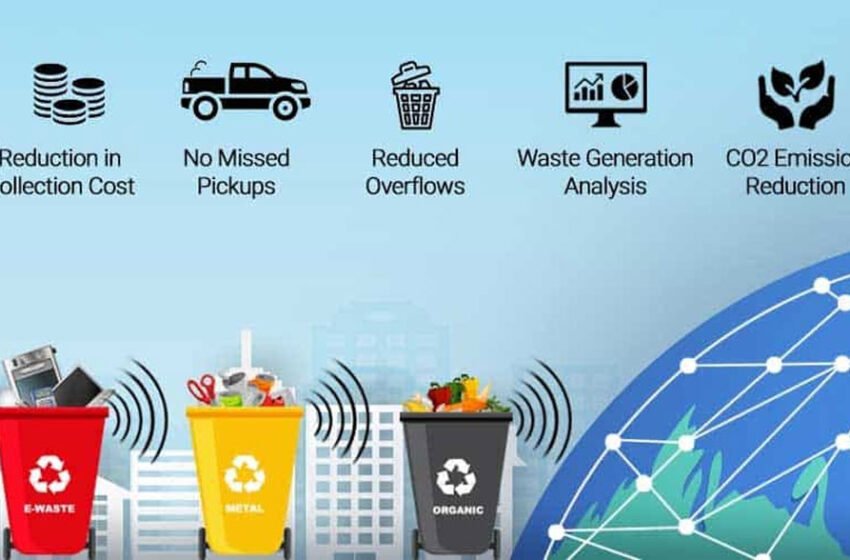
One of the bigger shifts has been the way companies need to handle risk. It’s no longer enough to keep hazardous materials in the right container and call it a day. Many organizations have learned that a misstep in handling or documentation can ripple out in ways that affect customer trust. This is where environmental services step in with growing importance. Not as a last resort, but as a practical partner that helps navigate logistics, auditing, and safe disposal pathways. Businesses are also adopting sensor based tools that track fill levels, contamination rates, and diversion performance, letting them adjust patterns in real time instead of waiting for the next quarterly review.
Sustainability Pressure Is Reshaping Expectations
There’s no shortage of investment enthusiasm for companies that can show measurable, transparent climate progress. Waste management might not be the headline grabber in this conversation, but it remains one of the clearest indicators of how committed an organization is to environmental responsibility. Investor pressure, customer expectations, and internal culture are converging into something stronger than traditional compliance. They’re pushing teams to rethink how they categorize, process, and repurpose materials in ways that feel grounded rather than performative.
Inside this shift, sustainable businesses are showing what it looks like to move past box-checking. Instead of focusing solely on diversion rates, they’re exploring closed loop manufacturing, modular packaging, and secondary markets where materials become inputs instead of leftovers. These approaches tend to reveal hidden inefficiencies along the way. When you streamline one part of a waste stream, it’s common to discover that other areas open up opportunities for savings or repurposing that no one noticed before. It’s a kind of operational clarity that comes from examining the full lifecycle of materials instead of treating disposal as the final chapter.
Technology Is Quietly Reducing Waste Friction
While automation gets all the attention in other business areas, waste tech has been quietly improving in ways that make everyday operations smoother. AI supported sorting systems are increasingly accurate at identifying materials that once required manual processing. Smart containers can flag contamination before it becomes costly. Software platforms consolidate data from across facilities so leaders can see exactly where waste is generated and where bottlenecks form. When teams can visualize waste flows, the path toward reducing them becomes far more intuitive.
These tools are being adopted across sectors because they replace guesswork with clarity. They don’t eliminate the need for trained people, but they amplify human decision making. Better information leads to better prevention strategies, and prevention is where the real savings tend to show up. It shifts the conversation from reactive cleanup to proactive material planning, something companies rarely had the bandwidth to pursue until systems became more connected.
Regulation Is Becoming More Predictable, Not Less
It’s easy to assume regulation will keep becoming more complicated, and in some ways that’s true. But in others, regulators are moving toward more consistent standards across regions. That means businesses operating across multiple states or countries sometimes find that planning ahead actually reduces long term confusion. As governments invest in circular economy frameworks, companies have clearer expectations to build around. That portability is making compliance less of a hurdle and more of a foundation.
There’s also a growing effort to reward companies that go beyond minimum requirements. Grants, tax incentives, and procurement preferences increasingly favor organizations that demonstrate responsible waste practices. This gives companies an extra reason to update legacy systems instead of viewing sustainability upgrades as a cost center. Responsible disposal is steadily becoming part of smart business planning rather than a burden tacked on after operations scale.
Leadership Choices Set the Tone
As companies mature, leadership teams are realizing that waste management decisions signal far more than operational discipline. They communicate values to employees and customers, and they send a message about how seriously the company takes its place in the broader environmental landscape. When senior leadership treats waste as an integral part of operations, teams become more engaged in problem solving at the micro level. Small efficiencies add up. People speak up more. Innovation finds its way into routine tasks.
Cultural alignment happens faster when leaders make it clear that waste systems aren’t about punishment or optics. They’re about building a workplace that takes responsibility seriously. When people understand why changes are happening and how they benefit both the company and the environment, participation rises naturally.
Managing complex waste streams used to be something companies addressed only when a problem surfaced. Today, the most successful organizations approach it as an ongoing strategy that supports their brand identity, operational efficiency, and long term resilience. The more they invest in thoughtful systems, the more they uncover hidden value. It’s becoming one of those rare business areas where doing the right thing and doing the smart thing often point in the same direction, and that alignment is shaping the future of responsible growth.